Jan.01,1970
The aerospace industry faces significant challenges when it comes to manufacturing complex structural components. As designers push the boundaries of aerodynamics and weight efficiency, manufacturers often grapple with intricacy and precision. Many have found that 5-axis CNC machining offers a compelling solution, enabling the production of parts that meet stringent specifications. For example, an aerospace company that previously struggled with multi-component assemblies reported a 40% reduction in assembly time after switching to 5-axis CNC machining.
Aerospace manufacturers frequently encounter pain points such as:
To address these needs, companies are increasingly turning to KINGCO's 5-axis CNC machining services, which provide innovative solutions that not only enhance precision but also streamline the manufacturing process, resulting in tighter tolerances and lower production times.
Before transitioning to 5-axis CNC machining, manufacturers must prepare adequately. Here’s a step-by-step guide:
Now, let’s delve into the process of utilizing 5-axis CNC machining to manufacture complex aerospace parts, illustrated as follows:
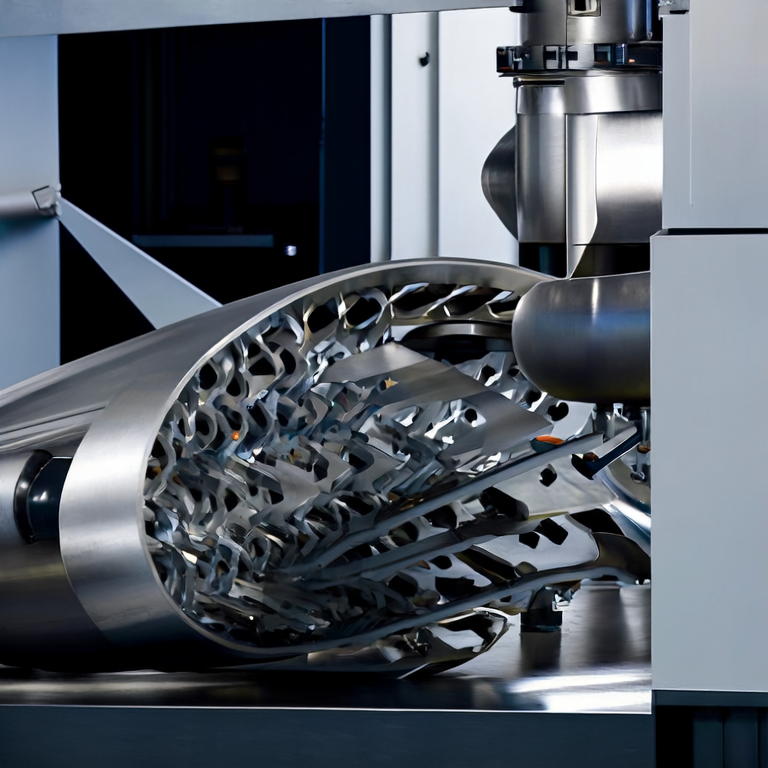
Aerospace manufacturers may encounter several common errors when transitioning to 5-axis CNC machining:
The transition to 5-axis CNC machining is essential for manufacturing complex aerospace structural components efficiently. By addressing pain points with innovative solutions and leveraging the right tools and techniques, manufacturers can significantly enhance their operational effectiveness. We recommend that companies invest in both technology and training to maximize the benefits of 5-axis machining.
5-axis CNC machining can be used for creating components such as wing structures, fuselage parts, and engine casings that require high precision and complex geometries.
The ability to machine parts from multiple angles without repositioning leads to fewer setups and a significant reduction in cycle times, often by 30% or more.
While initial investment costs may appear high, the long-term savings from reduced assembly times and improved part accuracy make it a cost-effective solution in the aerospace industry.
Latest News
Surface Finish Requirements for Medical CNC Parts: Ra Values Explained
Jan.01,1970
How CNC Rapid Prototyping Speeds Up Medical Device Development Cycles
Jan.01,1970
Tight Tolerance CNC Machining for Surgical Instruments: What It Takes
Jan.01,1970
Biocompatible Materials for CNC Machined Medical Implants and Tools
Jan.01,1970
How CNC Machining Supports Medical Device Prototyping and Approval
Jan.01,1970
Let's Build Your Ideas Into Precision Reality Today!
Services
Services
About Us
About Us
Industries
Industries
Resource
Resource
Contact Us
Shenzhen Kingco Precision Modeling Co., Ltd.
Add: Building B3,Anle Industrial Park,Hangcheng Road,Baoan District,Shenzhen City, Gunagdong Province, P.R.China
Guangdong Kingco Precision Technology Co., Ltd.
Add: 301, Block 30, No. 2, Chengnan 4th Road, Cuishanhu New District, Kaiping City, Guandgong Province, P.R. China
+86(755)2908 3033/3066
+86 150 1505 3416